Alcazar Thessaloniki: from a 15th-century mosque to a legendary cinema
A monument that hides far more than it shows
If you stand in front of the Alcazar, in the centre of Thessaloniki, try something simple: don’t look at it as just another old building. Notice the arches, the architecture, the openings and the way the monument holds its ground amid the modern rhythm of the city.
What we see today is not simply a restored historic building. It is a piece of Thessaloniki that has passed through different historical periods and been linked to different uses and people.
Its official name is the Hamza Bey Mosque. Its story begins in the 15th century, when Thessaloniki was already under Ottoman rule. According to its founding inscription, the mosque was built in 1467–1468 by Hafsa, daughter of Hamza Bey.
So when we walk along Egnatia today, the monument connects us to an era almost six centuries ago. Back then the city had a different shape, different streets and a different way of life. How many generations have walked past this building? How many times has the city transformed? The Alcazar is still here, carrying the traces of that journey.
From mosque to a distinctive architectural ensemble
The Alcazar did not stay the same through the centuries. Major extensions were made in the mid-16th century, and later came the porticoes and the colonnaded courtyard that define the monument today.
That courtyard deserves a visitor’s attention. It is not just an open space between walls. It is part of the architectural composition and helps us understand how the space was organised and how the different parts of the building connected.
There is something else worth noticing: the Alcazar is not isolated in an archaeological site. It stands in the living centre of Thessaloniki, among shops, streets and everyday meetings. The old is not somewhere far from modern life. It is right inside it.
So why do we call it the Alcazar?
The name “Alcazar Thessaloniki” comes from the cinema that operated in the monument’s courtyard during the 20th century. A building that began as a place of worship gained a new life, now linked to film and entertainment. The name passed into the city’s collective memory and has stayed there ever since.
Monuments don’t live only through dates and architectural features. They also live through people’s memories. For some, the Alcazar is an important Ottoman monument. For others, it is a night at the cinema, or a story heard from their parents. All these sides are part of its history, and none needs to erase the others.
In the heart of Thessaloniki, where Egnatia meets Venizelou Street and the city never stops moving, a historic monument is returning to everyday life. For years, many remembered it only behind scaffolding. Others knew it from the stories of older Thessalonians. Some had heard its name without realising it belongs to one of the city’s important historic buildings.
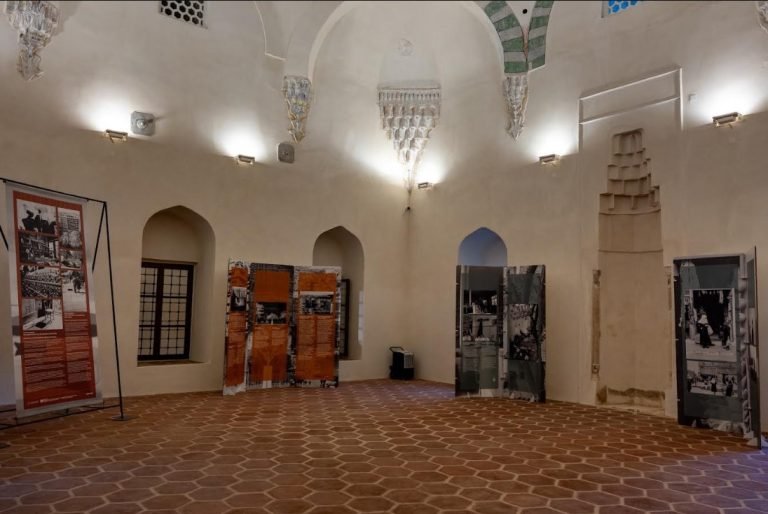
Since 11 October 2026, the Hamza Bey Mosque, known as the Alcazar Thessaloniki, has welcomed the public again, this time as a space for culture and exhibitions.
Which raises the first question: how can one building have been so many different things, lived through so many eras, and still have something new to tell us? That is the story worth discovering.


There are no comments yet
Be the first to comment on this article!